Highlight 01 / 09 — 2018 to 2025
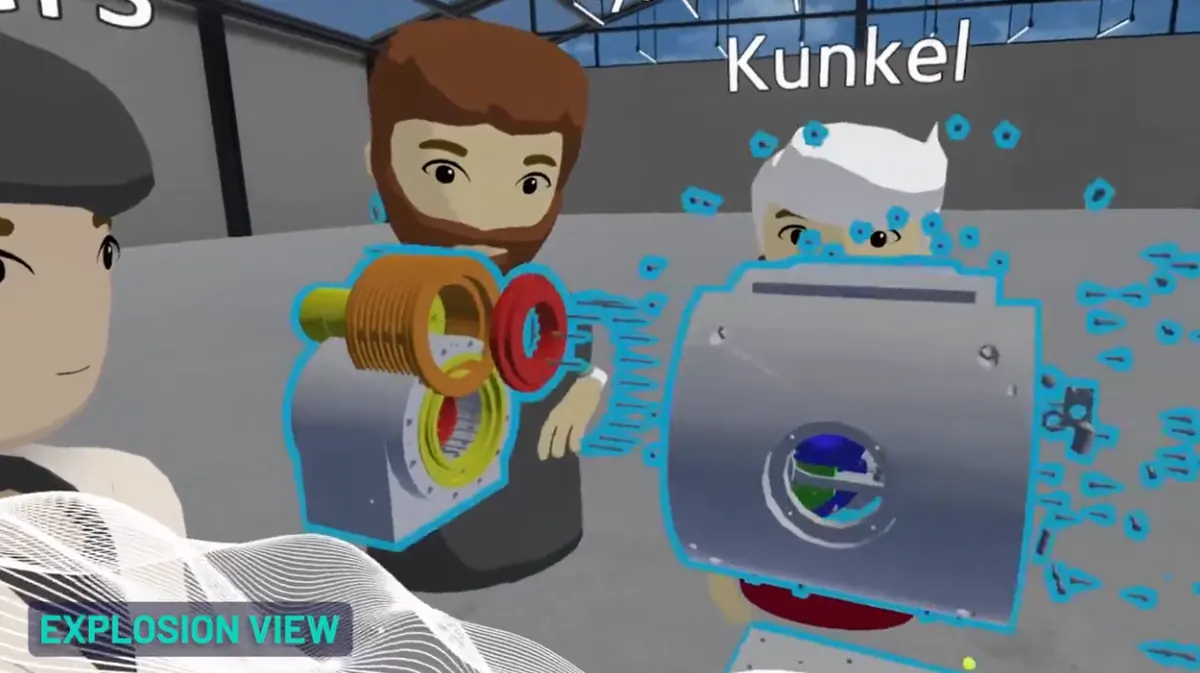
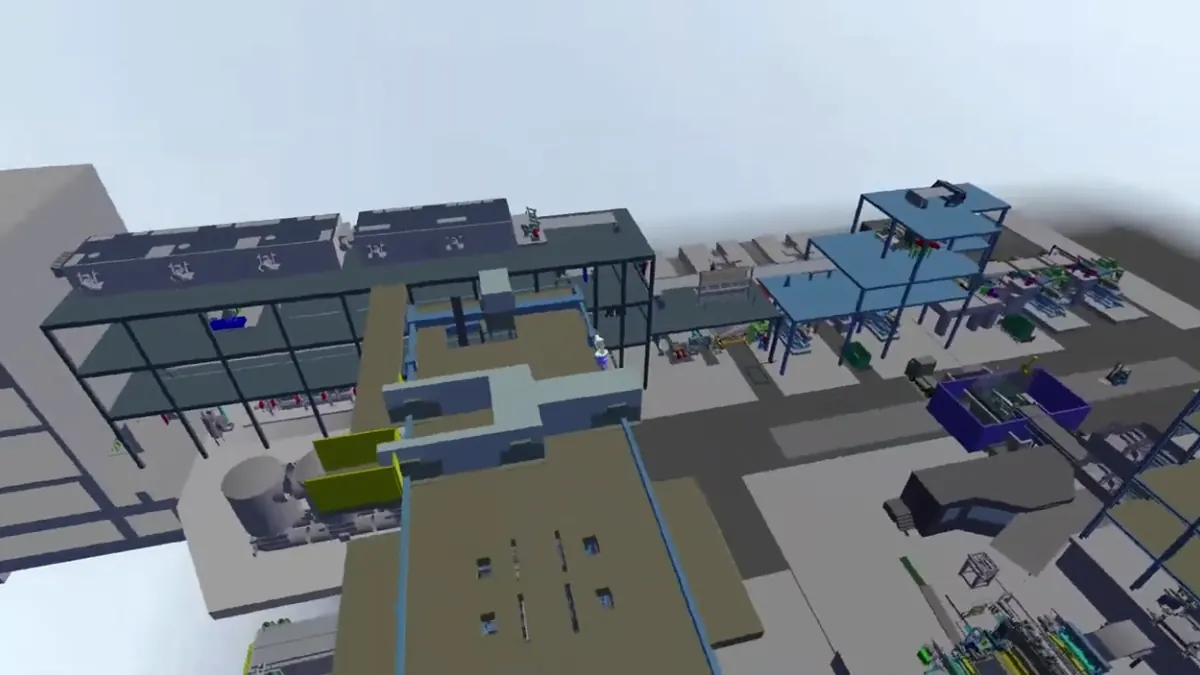
Seven years from head of backend to CTO of a CAD-to-VR collaboration platform — creating technology that helps in the construction of steel plants, the planning of large space telescope arrays and was heavily customized for two pilot programs of BWI - the primary digital partner and IT service provider for the German Armed Forces (Bundeswehr).

What I built
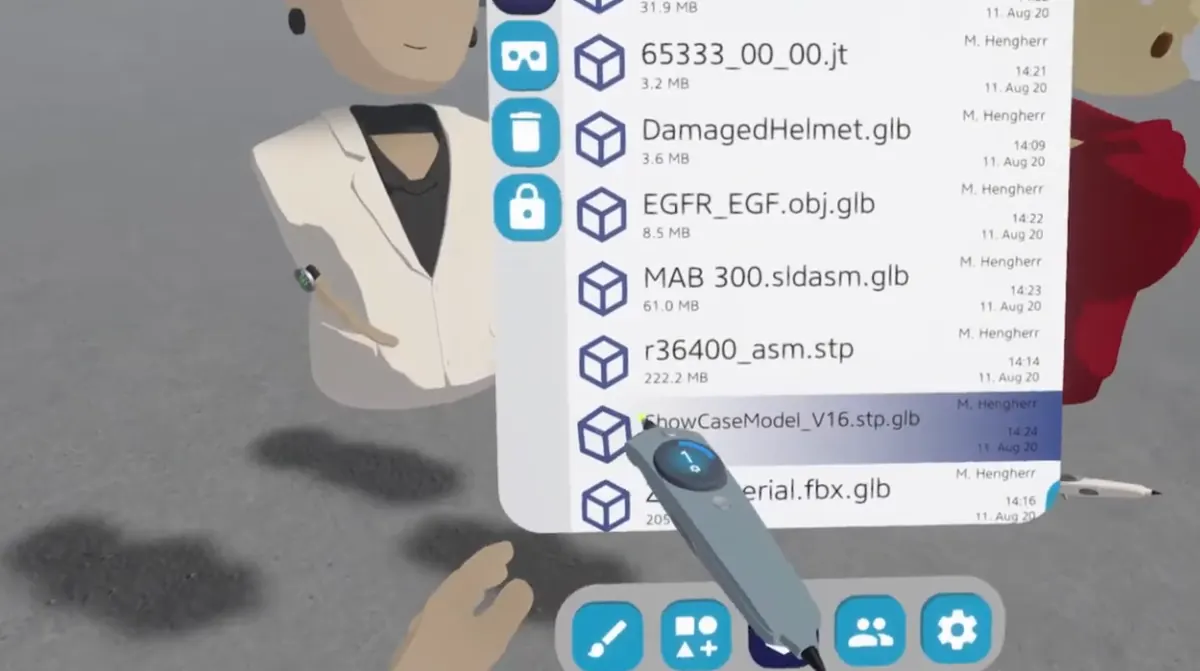
CAD import used to rely on proprietary loaders inside the VR client. I moved it to a dedicated open exchange format and a conversion step in the backend. That opened up a far wider range of libraries and tools for bringing data into the system: supported file formats grew from a handful to roughly ten times as many, and the VR client code became much easier to maintain.
Most of the data processing ran on servers we maintained ourselves. Moving it to autoscaling clusters in the cloud allowed far more parallel processing and cut waiting times for our customers significantly.
Streaming 3D data made it possible to process and display very complex customer models in VR, and load times dropped significantly. Native loading of Autodesk file formats also saved customers hours of pre-processing: they could upload their CAD data in the formats they use in their daily work.
Documentation, software development, release management and quality control now followed defined workflows. That gave involved stakeholders more transparency and improved pre-production quality as well as long-term maintainability.
I stayed in close contact with our most important customers and made sure their voices were heard when they needed timely support. That directly contributed to them becoming the most vocal champions of the product, among them SMS group, mtex and BWI.


In the field
How SMS group, mtex and BWI work with the platform, and where they talk about it themselves.
SMS group is an international machine and plant builder for the metals industry. Building plants means constant interfaces with new partners, and drawings regularly led to misunderstandings, so SMS group set out to bring multiplayer online gaming technology to engineering. WeAre Rooms is now used in all project phases, from sales through engineering, purchasing, manufacturing and assembly to introducing staff to the plant. Jan Buchner, head of assembly planning and project handling, estimates that it saves 70 to 80 percent of the time compared with phone calls and about 50 percent compared with video conferencing, and calls the user interface the biggest advantage: easy to use for everyone.
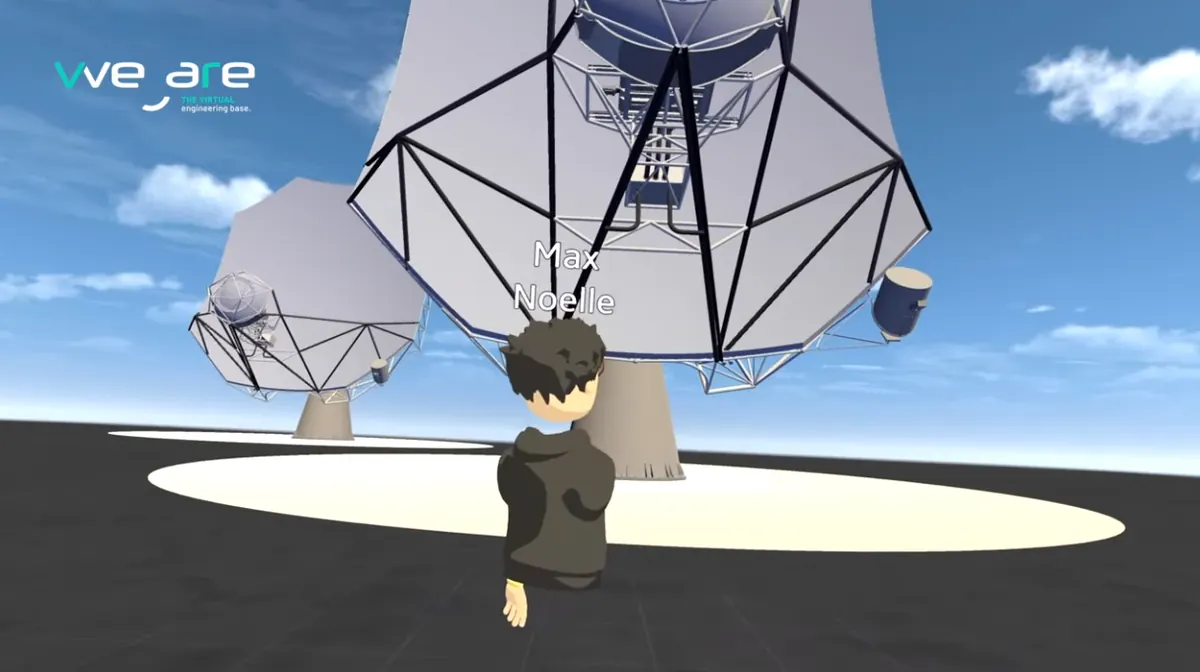
mtex antenna technology builds large, complex parabolic antennas of 2 to 35 meters for radio astronomy, geodesy and space applications. In 2021 the US National Radio Astronomy Observatory commissioned mtex to develop, design and build the first 18-meter prototype antenna for the ngVLA, a planned network of 244 radio telescope dishes that is meant to become the largest radio astronomy facility in the Northern Hemisphere; the prototype was handed over in 2025. mtex uses WeAre Rooms in project handling to visualize components, discuss them with customers and find solutions faster. It is also used for design reviews and larger events. CEO Lutz Stenvers was especially impressed by how realistic working in VR feels, which is what convinced him to buy the tool.
BWI is the digitalization partner of the German armed forces. Since October 2019 its innovation unit has run VR-Lage with the Luftwaffe: a shared virtual situation room in the cloud where pilots and commanders at different locations plan, brief and debrief air missions as avatars, with maps, whiteboards and the air tasking order in front of them. WeAre was part of the partner team from the first phase, providing the VR conference solution the room is built on. The second phase (2020–2021) added 4D maps and refined voice and gesture control. Other partners BWI names include Esri for geospatial data, Fraunhofer IOSB, which built the digital situation table, and a voice-AI start-up. I led the project on WeAre’s side.
Sources
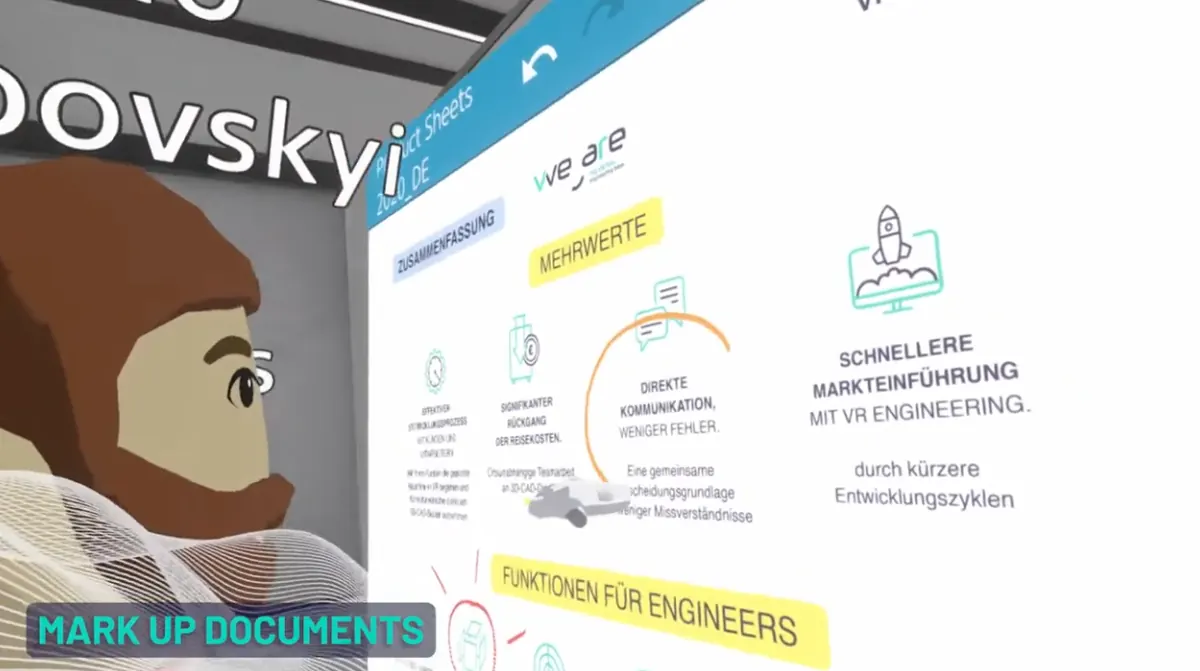
The screenshots on this page are stills from the video below, published by WeAre GmbH on YouTube and used with their permission. The link leads to YouTube; nothing is loaded from there unless you click.