Highlight — 2007 to 2012
Five years as shareholder and CTO: I built the backend of a QR-code mobile content and payment platform, at a time when most phones didn't have a camera yet. It led to a family of two European patents and later to a pivot into mobile apps for iOS, Android and WebOS.

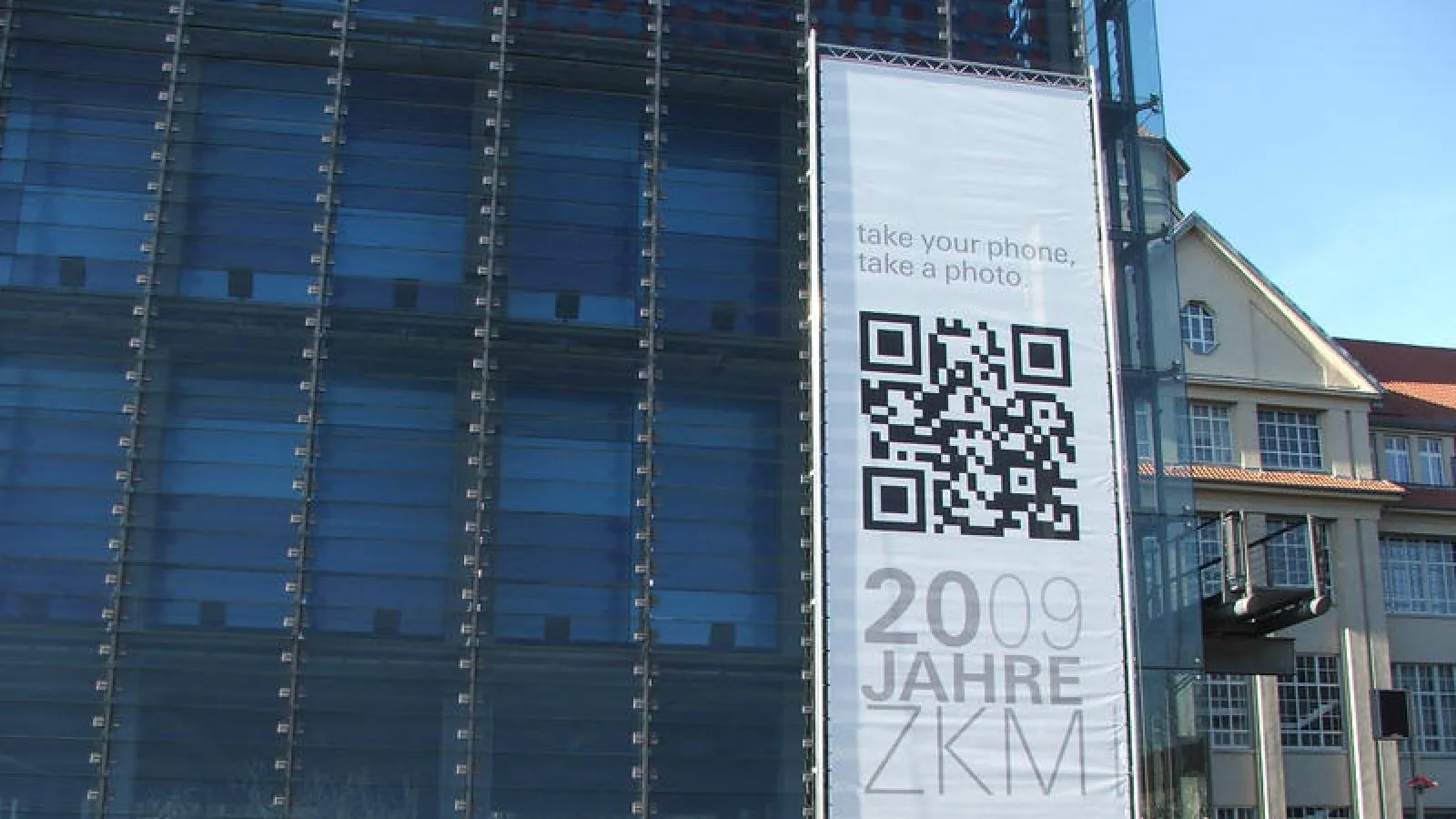
Please do not scan this code. We no longer own the domain it points to and the new site now sadly serves questionable content.
What it was
tagSOLUTE was a Karlsruhe start-up founded in 2007 with the aim of establishing mobile tagging in Germany: printed 2D barcodes, mostly QR codes, that a phone camera reads to open mobile content, a trend that was already mass-market in Japan. We served companies, institutions and cities with standardized services that needed no programming skills.
What we built
tagMOTO was the campaign platform behind it: QR codes, SMS keywords and mobile landing pages created and managed in one place, so a printed ad, flyer or poster could open a mobile page with images, sound or a download, and sell content through premium SMS.
Around the platform we built a QR code generator and reader, a Firefox extension that turns the current page into a code and a WordPress plugin.
tagMOTION collected campaigns and use cases, explained barcode formats and terms, and was listed as a QR code resource by other designers and developers.
Later we moved into mobile apps, among them price comparison apps for billiger.de on Android, Palm Pre (webOS) and iPhone, with built-in EAN and QR code scanners.
In the field
Mostly from tagSOLUTE’s own project pages and news of the time, preserved in the Internet Archive, and from the press. The archived copies are linked instead of the original domain, which should no longer be visited.

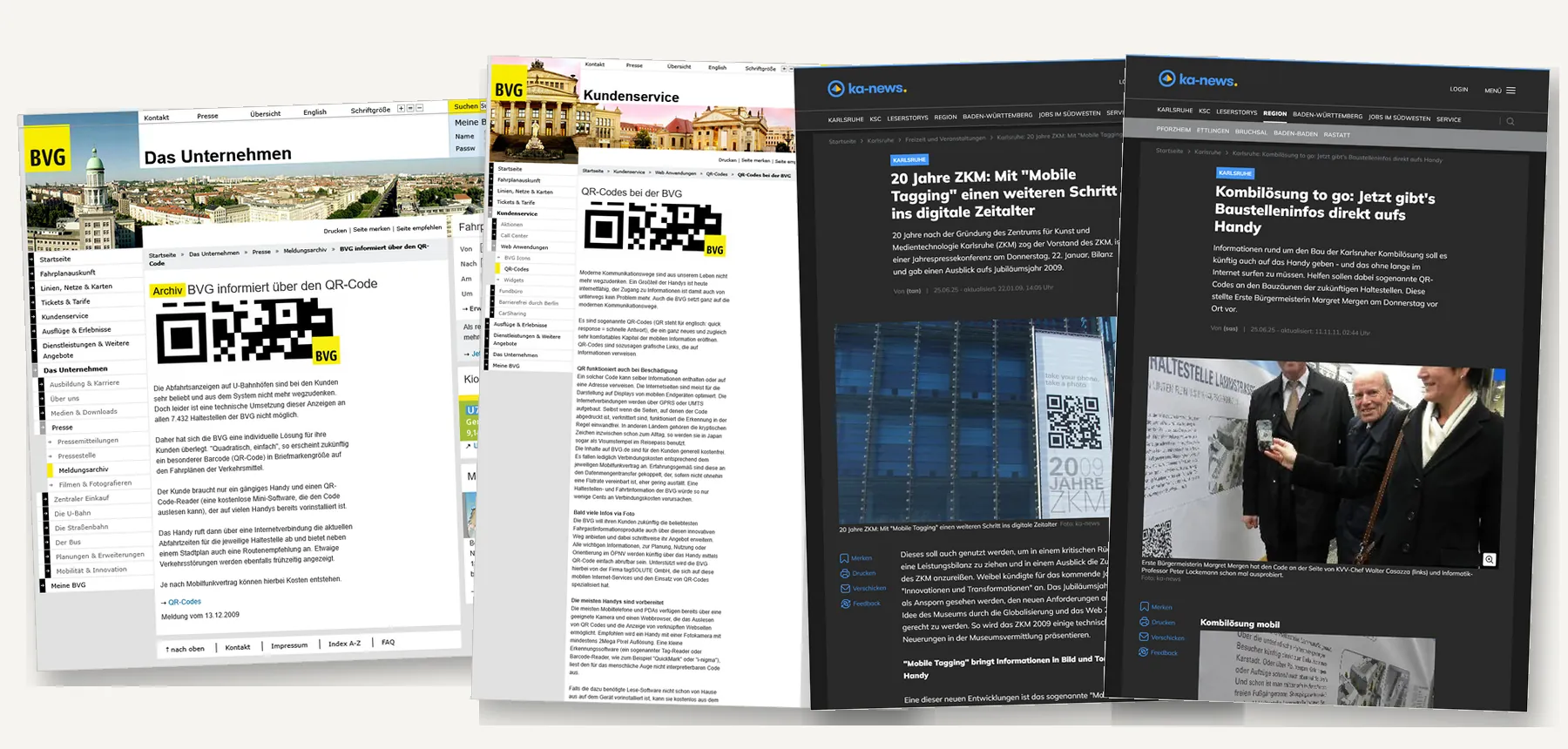
With the new timetables of 13 December 2009, QR codes appeared on all BVG timetables, because departure displays could not be extended to all of BVG’s 7,432 stops. tagSOLUTE acted as a technical advisor for BVG on the project in regards to the QR codes.
Karlsruhe’s new underground metro meant years of building sites in the city centre. tagSOLUTE was part of the consortium of the “Smarter City Karlsruhe” initiative, together with FZI, KIT, the rail infrastructure company KASIG, CyberForum and IBM, that worked on information for citizens and merchants affected by the construction. ka-news reported QR codes on the construction fences that open construction information on the phone, an idea of the same initiative.
For its 20th anniversary in 2009 the ZKM used mobile tagging more extensively than any cultural institution before, according to ka-news: codes on brochures, flyers, banners and posters opened mobile pages with up to 4,269 characters of text, images and sound. The programme booklet pointed to 13 events through barcodes and SMS keywords, and its cover carried a code leading to a special with a video address by the ZKM head, Prof. Peter Weibel. The ZKM kept using the technology afterwards; its own video page from 2011 is linked here for reference.
Barcodes and SMS keywords went onto flyers and posters for the Baden Open tennis tournament, the World Town Festival in Waldshut-Tiengen (one code per artist, with CD orders from the artists’ microsites) and the Technologie Region Karlsruhe’s regional day. For the Rheinkultur festival, concert visitors could download the official logo to their phone through premium SMS.
Sparkasse Pforzheim Calw used QR codes and SMS keywords for its 2009 World Savings Day prize draw, KabelBW for newspaper ads in Gernsbach and Eggenstein, and the price comparison portal billiger.de for its mobile site and apps. BAUR, Grohe and KSB used our QR codes in some of their print materials and catalogues.
The patent
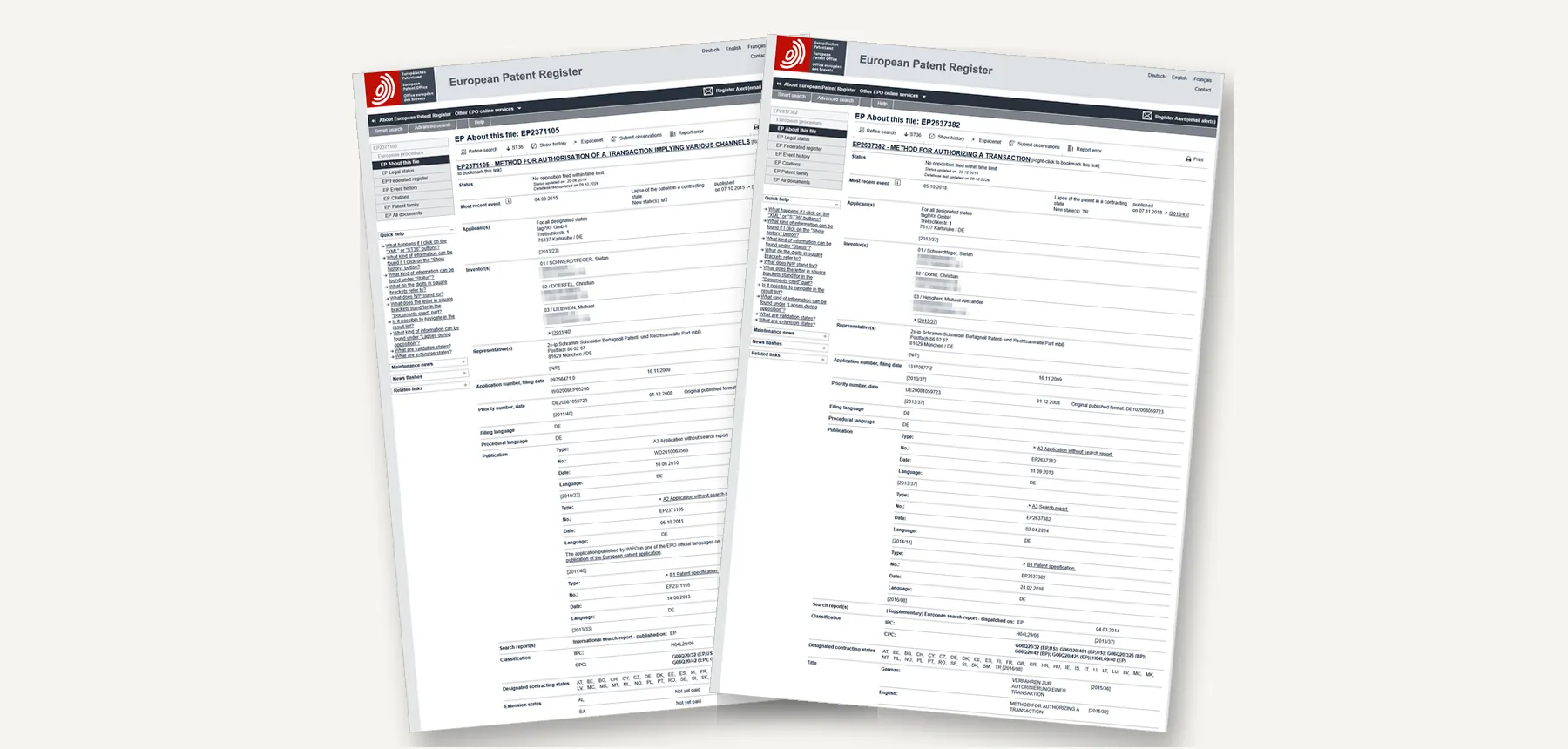
The patents belong to tagPAY GmbH in Karlsruhe. They protect a method for authorizing an internet transaction: if the authorization fails over one channel, a second authorization is started over another transmission channel, with the data adapted to the hardware of the device. The second patent is a divisional of the first, a route that lets the applicant pursue a further aspect of the same invention in its own application.

The parent application, filed in 2009 on a German priority of 1 December 2008 and published as WO 2010/063563, was granted on 14 August 2013 under the title “Method for authorisation of a transaction implying various channels”.
A divisional of the first application, which keeps its filing date of 16 November 2009 and the 2008 priority. It was granted on 24 February 2016, with no opposition filed. It names Stefan Schwerdtfeger, Christian Dörfel and me as inventors.